Choosing Bathroom Finishes for Austin's Hard Water
Austin's hard water leaves spots on glass, scale on faucets, and soap scum on tile, which makes finish selection one of the more practical decisions in a bathroom remodel.
The mineral content here is often overstated by companies selling water softeners, so it helps to start with what the water actually measures and what that means for the surfaces you look at every day.
The right finishes and materials will not stop mineral buildup, but they make it far less visible and much easier to clean.
Key Takeaways
Austin's water is moderately hard, not extremely hard. Austin Water data puts it near 4.9 grains per gallon, well below the 15 to 16 figures some softener companies advertise.
Hard water shows most on polished chrome, clear glass, and dark stone, where mineral spots and film stand out.
Brushed and matte finishes hide water spots better than polished ones, reducing the cleaning a bathroom needs.
Sealing grout and natural stone slows mineral staining and makes routine cleaning more effective.
No finish prevents mineral deposits. Finish choice only controls how visible and how stubborn they become.

How Hard Is Austin's Water, Really
Austin has moderately hard water, averaging around 4.9 grains per gallon by Austin Water utility data, which is far below the levels many water-treatment companies advertise.
Austin's water supply is surface water drawn from the Colorado River through the Highland Lakes, and surface water picks up fewer minerals than the groundwater that feeds harder Texas cities. On the Water Quality Association scale, moderately hard runs from 3.5 to 7 grains per gallon, and very hard begins above 10.5.
Figures you will see from softener vendors range from about 7 to 16 grains per gallon and often disagree with each other, which is worth keeping in mind given the product being sold alongside them.
The exact number also shifts with how the water is treated and with source conditions over the year. For the current figure, Austin Water publishesmonthly and quarterly water quality summaries that include total hardness. Starting there keeps finish decisions grounded in the real number rather than a sales pitch.
What Hard Water Does to Bathroom Fixtures and Glass
Even at Austin's moderate hardness, dissolved calcium and magnesium leave visible spots and scale on bathroom surfaces, concentrated wherever water evaporates.
Glass shower doors collect soap scum, buildup on faucets and showerheads appears as white crusty scale, and dark counters and mirrors show water stains after it dries. These are the same minerals that leave a film on glassware from the dishwasher.
The effect in Austin is gradual. You tend to see slight scale accumulate over years rather than the heavy buildup that appears within weeks in the hardest-water regions. Over time, deposits can narrow the openings in a showerhead and aerator, which shows up as reduced water pressure at the fixture.
None of this damages a well-built bathroom, but it shapes which finishes stay looking clean with the least effort.
Finishes and Materials That Handle Mineral Content
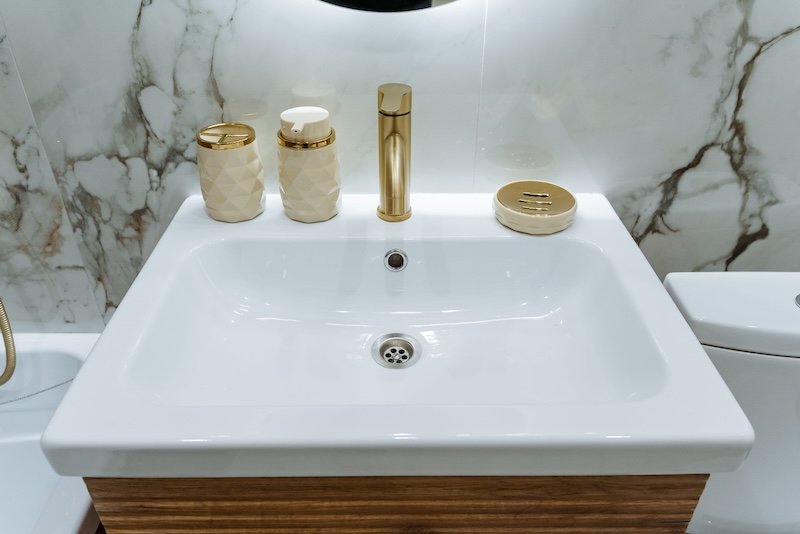
Brushed, matte, and textured finishes disguise water spots better than polished chrome or clear glass, which makes them the practical choice for an Austin bathroom. The goal is not to prevent deposits, since no finish does that, but to keep the ones that form from being obvious.
A few specifics matter when selecting fixtures and finishes for a bathroom remodel, and they matter even more in anolder Austin home where existing fixtures and glass have already collected years of scale:
Faucets and fixtures: brushed nickel, brushed gold, and matte finishes hide spotting, while polished chrome shows every drop. Matte black looks clean but can show light limescale, so it still benefits from a quick wipe.
Shower glass: clear glass shows scum fastest. A factory-applied protective coating helps water sheet off instead of beading and drying in place, which keeps the glass clearer long-term.
Tile and grout: larger tiles mean fewer grout lines to stain. Epoxy grout resists mineral staining better than standard cement grout, and cement grout should be sealed.
Countertops: quartz resists staining and etching better than marble. Natural stone can etch and stain from minerals and cleaners, so it needs sealing and gentler products.
Showerheads: models with flexible rubber or silicone nozzle tips let you rub scale off by hand, which keeps water flow steady without soaking.
Keeping a New Bathroom Clear of Mineral Buildup
A short, consistent routine keeps mineral deposits from setting into a new bathroom, and it works better than aggressive cleaning after buildup has formed.
The deposits are easiest to remove before they harden and bond to the surface. A workable routine looks like this:
Squeegee glass doors and wipe faucets dry after showers to stop spots from forming.
Soak showerheads and faucet aerators in white vinegar for a few hours when flow drops, then scrub and rinse to dissolve scale.
Reseal cement grout and natural stone on a schedule so minerals sit on the surface rather than soaking in.
Skip abrasive cleaners on finishes, since they dull the surface and make future deposits stick harder.
You can install a water softener to reduce buildup everywhere, including inside the water heater and supply lines, but at Austin's hardness, that is an optional investment rather than a necessity for a bathroom.
Finish choice, sealing, and a wipe-down routine handle the mineral content for most homes.
Conclusion
Austin's water is hard enough to notice on glass and chrome, but not the emergency some vendors describe.
Choosing brushed or matte finishes, sealing stone and grout, and keeping a simple wipe-down routine handles the mineral content for most homes.
Decide finishes with visibility and cleaning in mind, and check Austin Water's current hardness figure before paying for water treatment you may not need.
Frequently Asked Questions
Does Austin really have hard water?
Yes, but it is moderately hard, not extreme. Austin Water data puts hardness around 4.9 grains per gallon, because the supply is surface water from the Colorado River rather than mineral-heavy groundwater. You will see spotting and soap scum, but buildup accumulates over years rather than weeks.
What bathroom faucet finish is best for hard water?
Brushed nickel, brushed gold, and matte finishes hide water spots better than polished chrome. Chrome looks clean but shows every mineral spot, so it needs more frequent wiping to stay spot-free.
Do I need a water softener for my bathroom remodel?
Not for most Austin homes, given the moderate hardness. A softener reduces buildup throughout the house, but at Austin's levels, finish choice, sealing, and routine cleaning handle bathroom mineral deposits without one.
How do I remove hard water buildup from a new showerhead?
Soak it in white vinegar for a few hours, then scrub gently and rinse. Showerheads with flexible rubber nozzle tips are easier, because you can rub the scale off by hand.